10 Restorative Yoga Poses for Deep Sleep and Insomnia Relief
Have you ever laid in bed at midnight, staring at the ceiling with a racing mind? Late-night screen exposure, demanding work schedules, and unmanaged stress keep your sympathetic nervous system locked in a high-alert state, making restful sleep difficult to achieve.
Practicing gentle, restorative yoga for sleep serves as a natural reset for your body. By lowering cortisol production and activating the parasympathetic nervous system, bedtime yoga signals your brain that it is time to transition into restorative sleep. At YogVistaar, we offer customized home yoga instruction in Bengaluru and online therapeutic sessions designed to address sleep disorders and chronic stress.
💡 Quick Summary: What is the Best Yoga for Sleep?
The best yoga for sleep incorporates slow, passive restorative postures combined with rhythmic breathwork. Practicing 10 to 15 minutes of bedtime yoga lowers heart rate, releases physical tension, and enhances natural melatonin release for deeper, uninterrupted rest.
4 Core Restorative Poses to Fall Asleep Faster
You can practice these gentle postures directly on your bed or on a soft mat using household props like pillows or blankets:
1. Legs-Up-The-Wall Pose (Viparita Karani)
Circulation & Calm- Sit close to an open wall with your hip touching the wall base.
- Gently swing your legs up against the wall as you swing your torso back to lie flat on your bed or mat.
- Optionally place a folded blanket or bolster under your lower back for elevation.
- Rest your arms outward with palms facing up and close your eyes for 5 to 10 minutes.
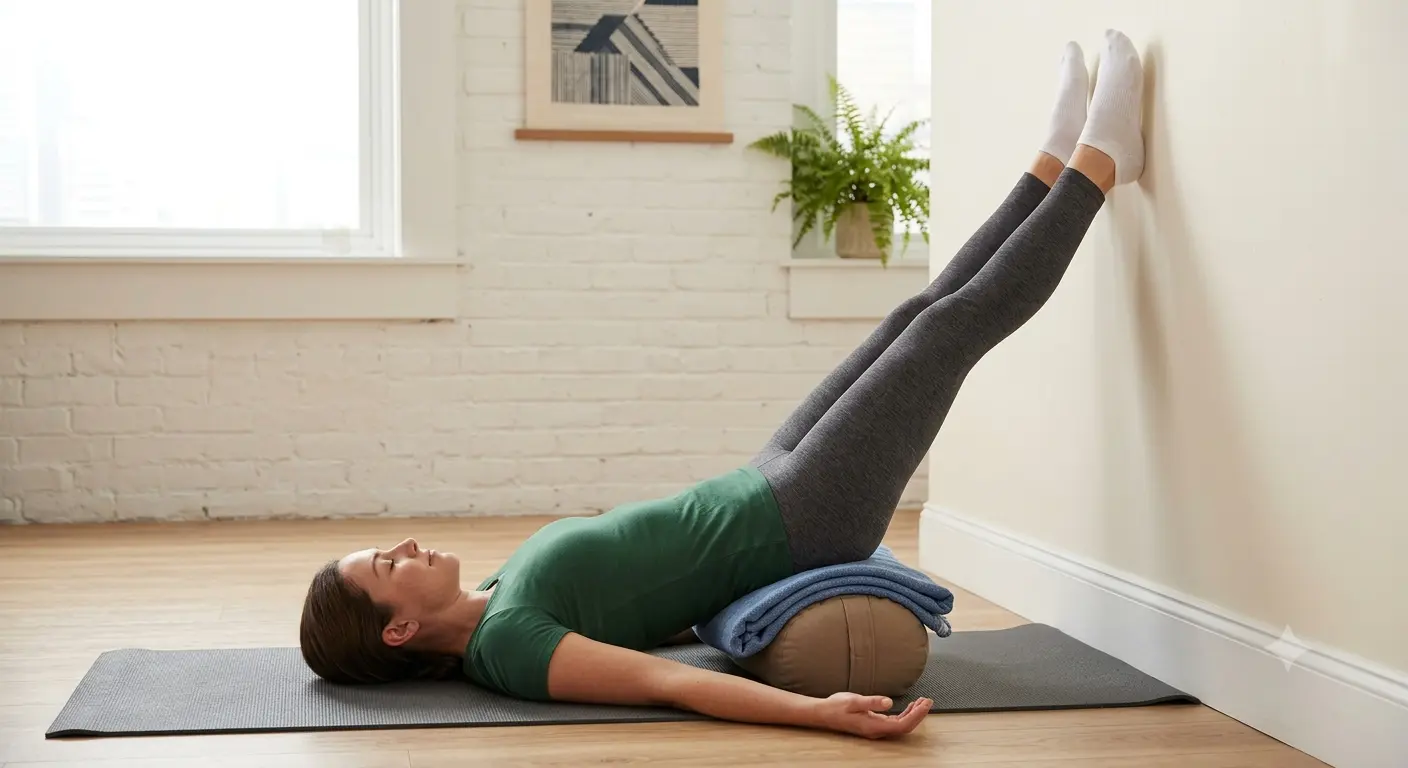
Relieves heavy leg fatigue, drains excess fluid accumulation, and lowers heart rate to promote rapid muscle relaxation.
- Maintain deep, slow abdominal inhales and long exhales.
- Keep your spine resting comfortably flat on your mat.
- Do not force your hips flush against the wall if hamstrings feel tight.
- Avoid straining your neck muscles while getting into position.
2. Reclining Bound Angle Pose (Supta Baddha Konasana)
Hip & Pelvic Relaxation- Lie down flat on your back with knees bent and feet resting on the surface.
- Bring the soles of your feet together and let your knees fall outward to both sides.
- Place pillows or yoga blocks under each knee for support so legs rest comfortably.
- Place one hand over your abdomen and one over your heart; focus on steady diaphragmatic breathing.
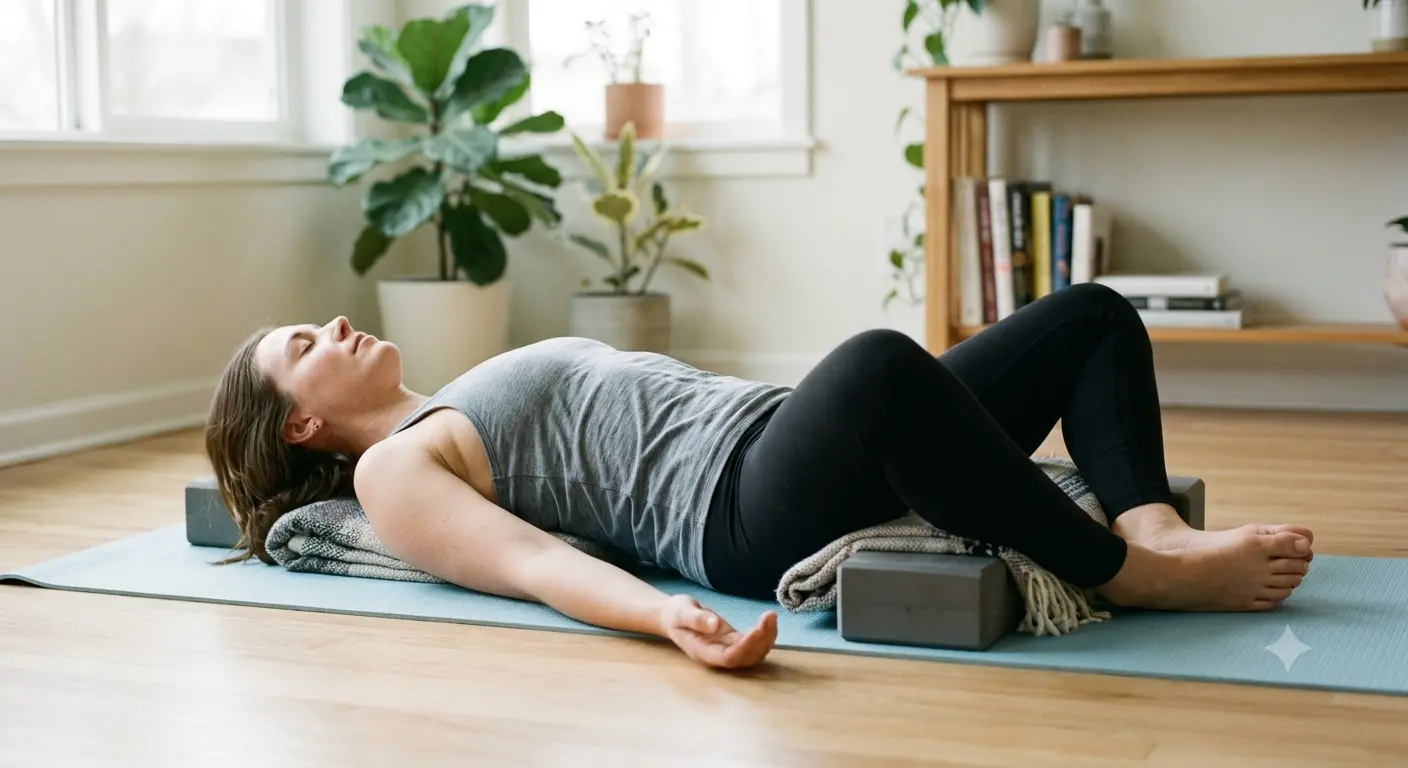
Releases groin and inner thigh tightness where daily emotional stress accumulates, softening pelvic floor tension.
- Use sufficient prop support under knees to avoid strain in the inner thighs.
- Keep chest and shoulders soft and relaxed.
- Avoid letting your knees hang unsupported in the air.
- Do not arch your lower back off the floor.
3. Restorative Child’s Pose (Balasana)
Spine & Nervous System Relief- Kneel on your mat, bring big toes together, and widen your knees hip-width apart.
- Hinge forward from the hips, lowering your torso down between your thighs.
- Rest your forehead gently onto a bolster, pillow, or folded block.
- Extend your arms forward or along your side body; hold for 3 to 5 minutes with slow breath cycles.
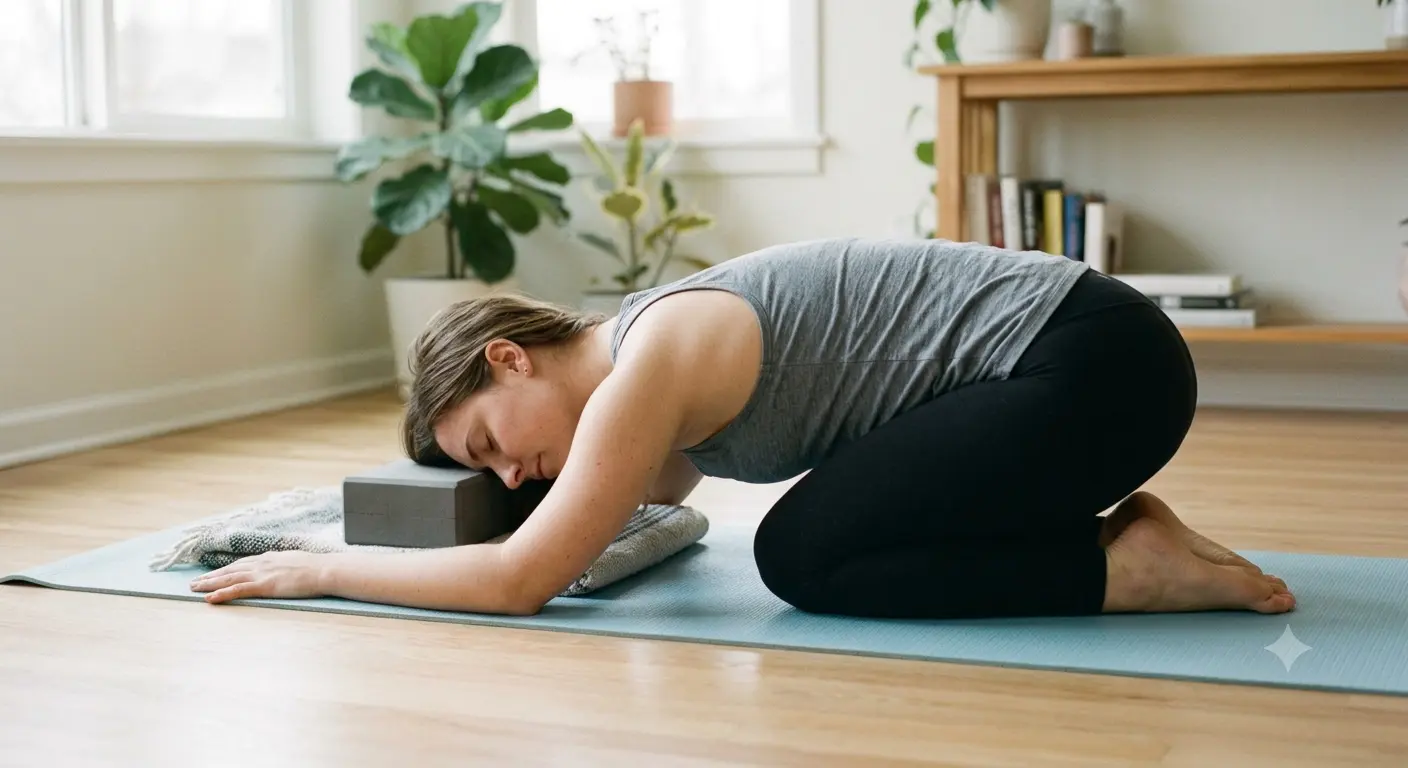
Gently decompresses the lumbar spine, soothes mental overactivity, and calms central nervous system firing.
- Allow your hips to sink back toward your heels.
- Focus on breathing into the back of your ribs.
- Avoid holding this pose if you experience severe knee joint pain.
- Do not tense your shoulders upward toward your ears.
4. Corpse Pose (Savasana) with 4-7-8 Breathing
Deep Sleep Transition- Lie completely flat on your back with feet shoulder-width apart and arms open at 45 degrees.
- Inhale quietly through your nose for a count of 4 seconds.
- Hold your breath gently for a count of 7 seconds.
- Exhale completely through your mouth with a soft whoosh sound for a count of 8 seconds.
- Repeat this breath cycle 4 to 8 times before letting your breath return to normal.
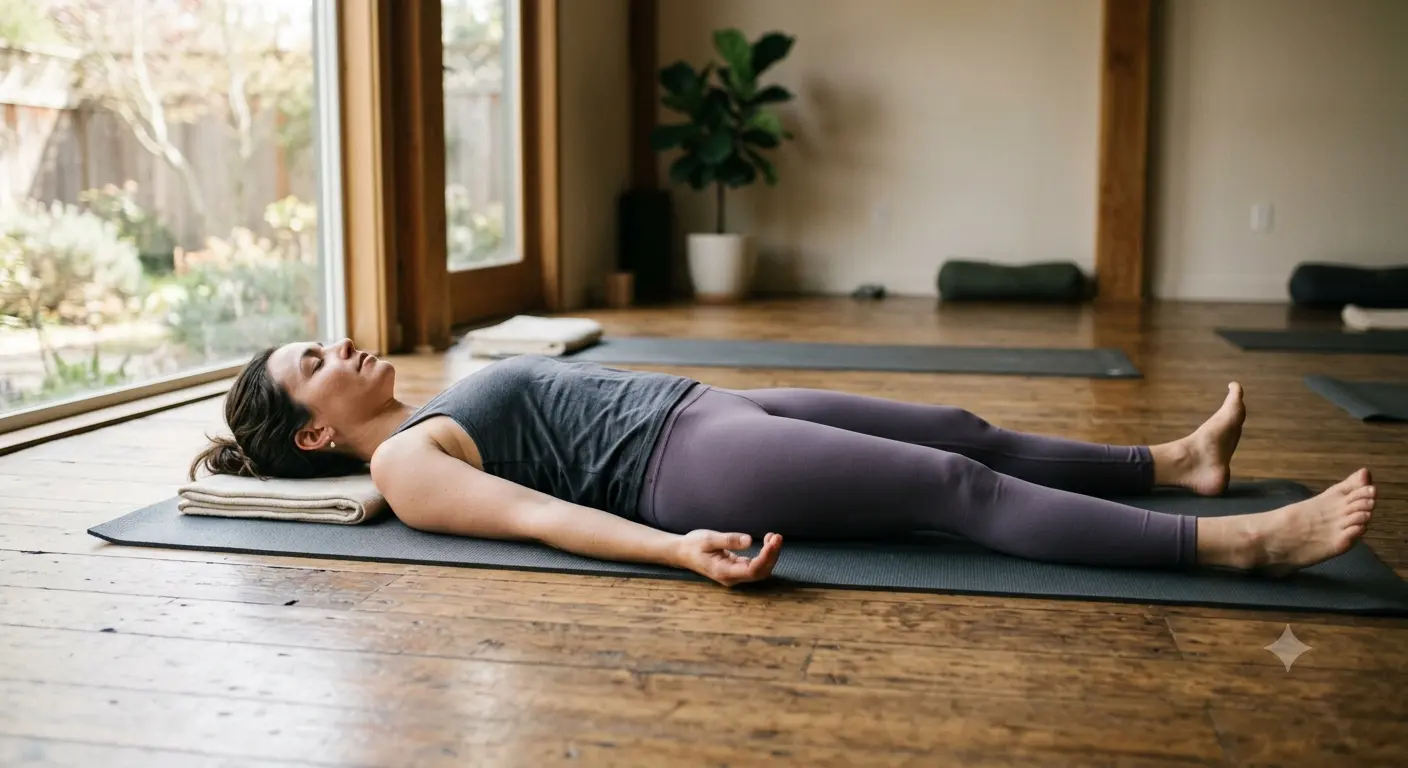
The prolonged exhalations directly trigger parasympathetic dominance, helping slow the mind down for sleep.
- Ensure room lights are dimmed and noise distractions minimized.
- Cover yourself with a light blanket to maintain body temperature.
- Do not strain or gasp if holding breath for 7 seconds feels challenging.
- Avoid checking mobile devices or digital screens after completing this pose.
How Does Yoga Nidra Assist with Insomnia?
Yoga Nidra (guided psychic sleep) systematically releases physical, emotional, and mental tensions while maintaining subtle awareness. Clinical research suggests that 30 minutes of deep Yoga Nidra provides restorative benefits comparable to several hours of conventional sleep, making it an effective holistic practice for chronic insomnia and high anxiety.
A Simple 10-Minute Bedtime Sequence
Follow this straightforward timeline directly in your bedroom before turning out the lights:
- Minutes 1–2: Child’s Pose (Focus on deep diaphragmatic inhalations)
- Minutes 3–6: Legs-Up-The-Wall Pose (Slowing vascular tone)
- Minutes 7–8: Reclining Bound Angle Pose (Releasing hip & lower back tension)
- Minutes 9–10: Savasana with 4-7-8 Breathing (Final mental transition into sleep)
3 Essential Rules for Bedtime Practice
1. Keep Lighting Low: Use ambient warm light or dim lamps to support natural melatonin production.
2. Emphasize Long Exhalations: Ensure your exhale phase lasts longer than your inhale to activate body relaxation responses.
3. Avoid Active Stretches: Keep movements passive and relaxed to prevent spiking your heart rate before bed.